
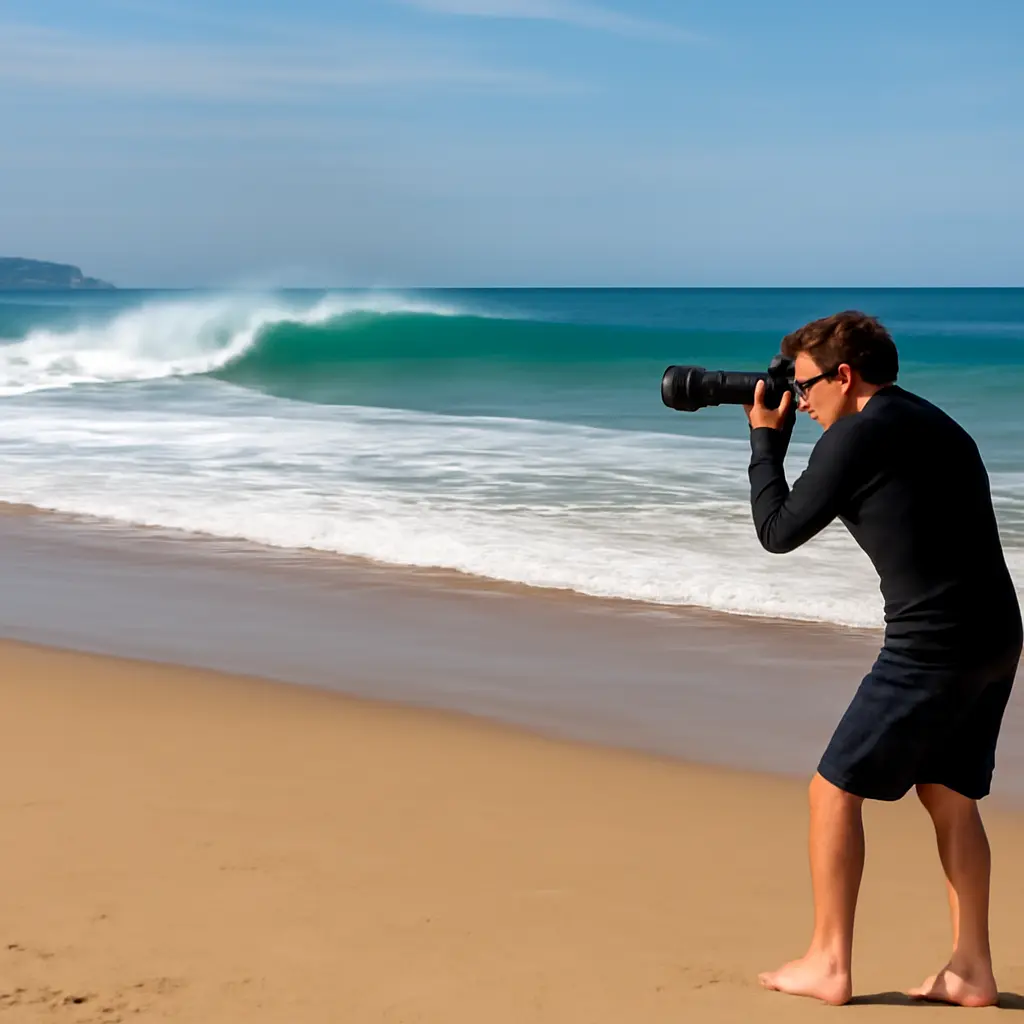
Surf photography is the practice of documenting waves, surfers, and coastal culture from the water, shore, or air. In 2026, it can pay through commercial assignments, licensing, editorial commissions, prints, and creator partnerships—but a camera alone is rarely a reliable income source. The strongest prospects are for photographers who combine distinctive access and dependable delivery with multiple sales channels. Stock licensing faces pressure from abundant imagery and changing platform economics, while travel, equipment, insurance, and time in the water remain substantial costs. The sections below compare those revenue streams, explain what is not paying as reliably, and outline practical ways to build a sustainable surf-photo business.
Commercial assignments and licensing: the most dependable surf photography revenue
A revenue model is the method by which a photographer turns images and related services into income. For surf photography, the main models are commissioned shoots, image licensing, editorial assignments, prints, and direct-to-audience products. The U.S. Bureau of Labor Statistics describes photographers’ work as creating and preserving images for a range of clients and purposes; its occupational data also show why income should not be treated as a fixed salary benchmark for every specialty. Surf photographers are a small, varied group, and public labor statistics do not isolate their earnings.
The practical distinction is between being paid to make specific images and being paid later for permission to use images already made. Commissioned work usually offers clearer scope and payment terms. Licensing can generate repeat sales, but demand, usage rights, and the photographer’s distribution determine whether it does. These models are strongest when combined rather than treated as competing choices.
Commercial shoots and brand campaigns
A commercial assignment is a shoot commissioned to support a business objective, such as advertising, product launches, tourism marketing, or athlete sponsorship. A surf brand may need images of a surfer using a board or apparel in a particular setting, with a specified delivery date, image count, and usage period. The photographer can charge for production time and license the resulting images for defined uses.
This work tends to pay better when the photographer can solve more than the camera problem: finding talent, securing access, managing safety, working around tides and weather, and delivering edited files on schedule. The American Society of Media Photographers advises photographers to define licensing terms and usage clearly in contracts. For surf work, that means distinguishing, for example, a limited regional social campaign from broad, long-term advertising rights. Fees vary widely, so a specific rate should be set from the brief, production costs, usage, and negotiation—not from an unsupported universal “day rate.”
Image licensing and editorial commissions
Licensing grants a client permission to use an image under agreed conditions; it does not automatically transfer copyright. Editorial sales may come from magazines, newspapers, publishers, and news services, while commercial licenses serve advertising and promotional needs. The U.S. Copyright Office explains that copyright protection generally arises when an original work is fixed in a tangible medium, giving photographers a basis to control and license their images.
For surf photographers, a useful archive is not simply a large collection. It is searchable, captioned, accurately dated, and accompanied by information about the surfer, location, event, and any restrictions. A recognizable athlete, unusual wave, competition, or well-documented coastal story can make an image more useful to editors and buyers. Editorial work is less predictable than a contracted campaign, so photographers should budget for the possibility that a pitch or submitted image will not sell.
Prints, workshops, and direct sales
Direct sales include fine-art prints, books, workshops, and paid experiences sold to customers without relying entirely on a publisher or stock agency. These products can preserve a larger share of the sale for the photographer, but they require marketing, fulfillment, customer support, and—in the case of workshops—careful attention to participant safety and local rules.
A limited print series tied to a specific break, coastline, or body of work is more distinctive than an undifferentiated online gallery. Workshops may suit photographers with strong local knowledge and teaching skills, but they are not passive income: weather cancellations, insurance, permits, transport, and group management all affect the margin. Direct sales are most promising when a photographer already has an audience or a clear connection to a place or community.
Costs and business practices: what determines whether surf photography pays
Gross revenue is not profit. Surf photography has unusual operating costs because the photographer may need water housings, long lenses, travel, repairs, data storage, and time spent waiting for suitable waves. A profitable assignment is one whose net return covers those costs, taxes, insurance, unpaid administration, and replacement equipment—not merely the hours spent shooting.
The National Oceanic and Atmospheric Administration’s coastal and marine information resources illustrate how much conditions vary by location and time. Surf photographers must plan around swell, tides, wind, access, and hazards, but no forecast guarantees a productive session. That uncertainty makes budgeting and client communication central parts of the work.
Budgeting for travel, equipment, and safety
A cost plan should include camera bodies, lenses, housings, ports, maintenance, insurance, transport, accommodation, meals, backup storage, and post-production. Water housings and lenses may need servicing after exposure to salt and sand; a failure at a remote break can erase the value of an otherwise promising trip. Photographers should also account for the opportunity cost of days spent traveling or waiting for conditions.
Safety is a business cost as well as a personal responsibility. The National Weather Service and local authorities provide marine and beach hazard information, while local lifeguards and experienced surfers can offer context that a forecast cannot. Photographers should assess currents, rocks, crowds, water temperature, and access before entering the water, and avoid putting themselves or surfers at risk for a shot. Remote assignments may require appropriate insurance, emergency planning, and permits.
Contracts, usage rights, and cash flow
A written agreement should specify the deliverables, payment schedule, cancellation terms, editing expectations, image selection process, permitted uses, territory, duration, exclusivity, and credit requirements. It should also clarify whether the client is buying a license or copyright assignment. Broad, perpetual, exclusive usage can be substantially more valuable to a client than a limited campaign license, so the terms should be priced and negotiated accordingly.
Cash flow can be uneven because commercial clients may pay after delivery, while travel and production expenses occur in advance. Deposits, staged payments, written approvals, and a reserve for taxes and equipment replacement can reduce the risk. Photographers should also keep records of expenses and licensing income and consult a qualified accountant about their circumstances.
Low-return approaches: what is not paying as reliably in 2026
Some activities can build visibility without producing dependable income. Free exposure, large undirected photo archives, and generic social posting may help a portfolio reach people, but they do not guarantee a buyer, a commission, or a profitable license. The key test is whether an activity leads to a measurable business outcome: qualified inquiries, paid usage, repeat clients, product sales, or a valuable editorial relationship.
Undifferentiated stock libraries
Stock photography is the licensing of images through an agency or platform that connects contributors with buyers. It can work for distinctive, well-keyworded images that meet a clear need, but uploading many similar shots does not ensure meaningful sales. A widely available image may face intense competition, and the contributor’s return depends on the platform’s contract, pricing, commission, and sales volume.
The U.S. Copyright Office’s guidance on copyright makes an important distinction: owning a photograph’s copyright does not itself create demand. Before submitting work, read the platform’s current contributor agreement, understand exclusivity and takedown rules, and compare the likely return with the time needed to caption and maintain the archive. Stock can be a supplementary channel; it is risky to treat it as a guaranteed paycheck.
Social-media reach and unpaid “exposure”
Social platforms can showcase a portfolio and help clients discover a photographer, but follower counts and views are not equivalent to sales. Platform algorithms, audience geography, and changing recommendation systems affect reach, while the photographer may have limited control over how content is displayed or monetized.
An unpaid request is worthwhile only when its value is concrete and agreed in advance—for example, a portfolio-building collaboration with defined credit, access, or a credible path to paid work. “Exposure” without a specified audience, usage limit, or follow-up opportunity is difficult to value. Photographers should also avoid granting broad commercial rights in exchange for a tag or repost.
AI-generated imagery and the value of authentic access
Generative AI has increased the supply of synthetic visual content and may put pressure on buyers who need generic surf-themed imagery. It does not replace every photographic assignment: clients may need authentic documentation of a specific athlete, event, product, or place, as well as reliable rights information and a photographer who can work safely on location.
The commercial response is to emphasize verifiable access, accurate captions, consistent color and delivery, and relationships with athletes, editors, and brands. The U.S. Copyright Office has published reports examining copyright and artificial intelligence, but legal treatment can depend on the work and circumstances. Photographers should avoid making blanket claims about ownership or AI training and should review current contracts and applicable law.
A practical 2026 strategy for surf photographers
A resilient business pairs dependable commissioned work with selective licensing and audience-based sales. Rather than trying every platform, photographers can choose a small number of channels that fit their work, audience, and location, then track which ones produce paid results.
- Build a focused portfolio around a clear specialty, such as water photography, competitions, athlete portraits, coastal travel, or documentary storytelling.
- Contact brands, tourism organizations, editors, and athletes with a concise proposal that explains the visual concept, deliverables, schedule, and intended usage.
- Use written estimates and licenses; price the rights requested, not just the time spent pressing the shutter.
- Organize and caption images promptly so that an archive can serve editorial and commercial buyers.
- Track net income by channel, including expenses and unpaid hours, and discontinue activities that repeatedly fail to produce worthwhile returns.
- Make safety, local access rules, environmental respect, and accurate representation part of every assignment.
A simple chart can help compare channels: place net income per project on one axis and hours invested—including travel, editing, and administration—on the other. Add a third measure for repeat business. This makes it easier to distinguish a high-revenue campaign with strong repeat potential from a time-consuming activity that generates attention but little income.
Conclusion: surf photography pays when access meets a business model
In 2026, surf photography can earn through commercial assignments, carefully scoped image licensing, editorial work, prints, and services such as workshops. Commercial work is often the clearest route to a defined fee, while licensing and direct sales can diversify income but are less predictable. Generic stock uploads, unpaid exposure, and social reach alone are not dependable business plans.
The broader lesson is that strong images are only one part of a sustainable practice. Safety, access, contracts, copyright, costs, accurate metadata, and client relationships all affect whether the work pays. Photographers should review their own net returns, strengthen the channel that produces repeat business, and read current industry and legal guidance before granting rights or taking on expensive travel.
Sources: U.S. Bureau of Labor Statistics, Photographers, Occupational Outlook Handbook, https://www.bls.gov/ooh/media-and-communication/photographers.htm; American Society of Media Photographers, Business Resources and Licensing Guidance, https://www.asmp.org/resources/; U.S. Copyright Office, Copyright Basics, https://www.copyright.gov/what-is-copyright/; U.S. Copyright Office, Copyright and Artificial Intelligence, https://www.copyright.gov/ai/; National Oceanic and Atmospheric Administration, National Weather Service Marine Forecasts, https://www.weather.gov/marine/; National Weather Service, Beach Hazards and Safety, https://www.weather.gov/safety/beach
